As Seen in The Wall Street Journal, Bloomberg, Fox News Media, Entrepreneur, NBCNews.com & YahooNews.com58,846 total fake jobs removed from LinkedIn150 fake jobs removed from Teal7,000+ fake profiles removed from LinkedIn1,000+ hijacked profiles removed and disrupted100s of fake companies destroyedOne Mission — Decimating Criminal EnterprisesAs Seen in The Wall Street Journal, Bloomberg, Fox News Media, Entrepreneur, NBCNews.com & YahooNews.com58,846 total fake jobs removed from LinkedIn150 fake jobs removed from Teal7,000+ fake profiles removed from LinkedIn1,000+ hijacked profiles removed and disrupted100s of fake companies destroyedOne Mission — Decimating Criminal Enterprises
The Impersonation
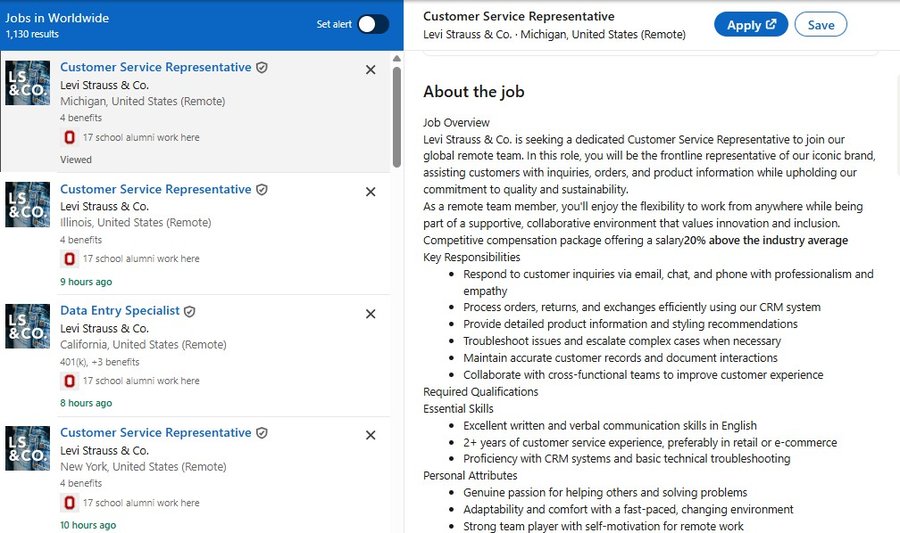
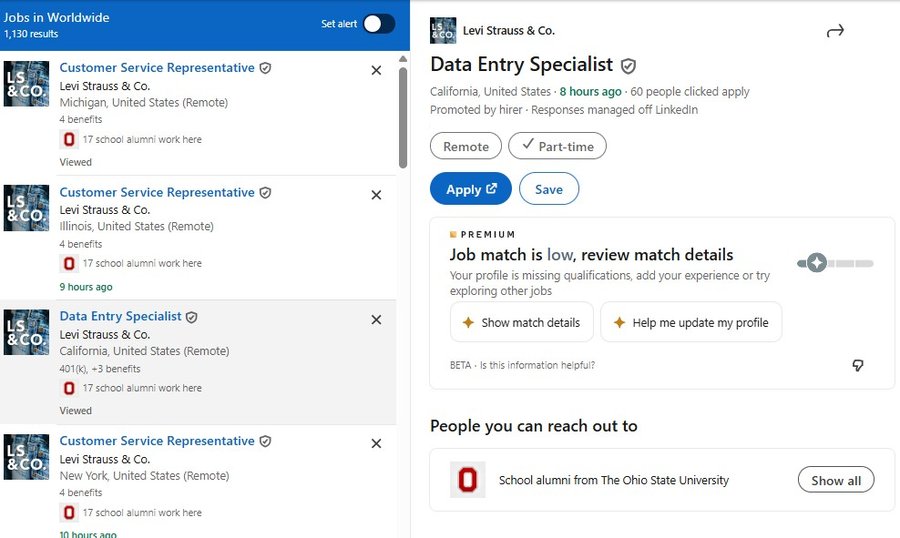
Levi Strauss & Co. — the global denim icon that pioneered durable, stylish jeans — runs a verified LinkedIn company page with 1,130 active job listings. Twenty-one of them were never posted by Levi's at all. They carried the company's real name, logo, and LinkedIn's verified checkmark next to titles like "Customer Service Representative" and "Data Entry Specialist," each one indistinguishable at a glance from the 1,109 genuine roles surrounding it.
The Scale
Levi Strauss & Co. earned its verification the way every legitimate company does — by going through LinkedIn's process to prove it's a real business with real opportunities. That verification is exactly what scammers exploited. They didn't need to build a fake company page; they added fake jobs directly onto a real, trusted, already-verified one, betting correctly that neither LinkedIn nor Levi's would comb through eleven hundred listings with a fine-tooth comb.
The Redirect
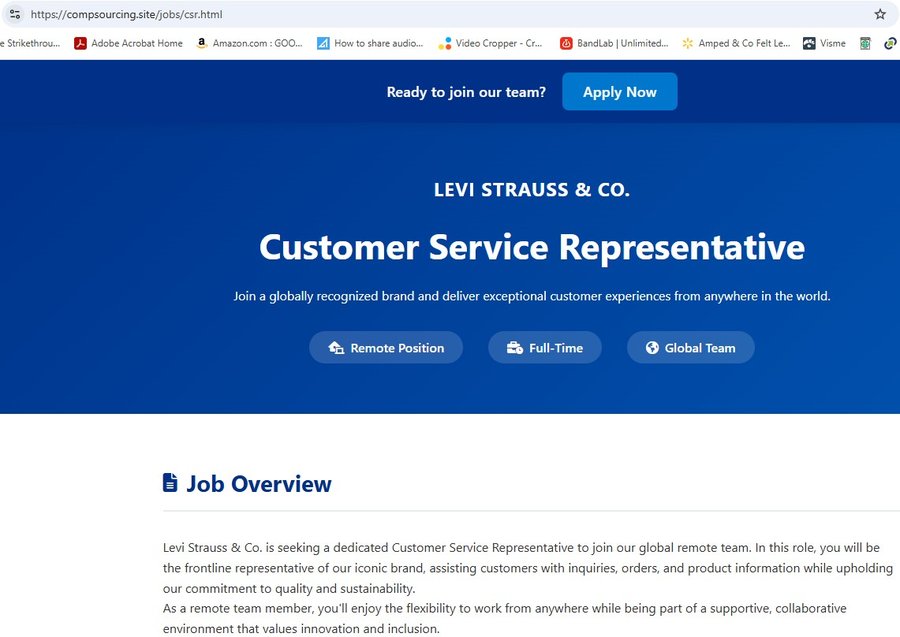
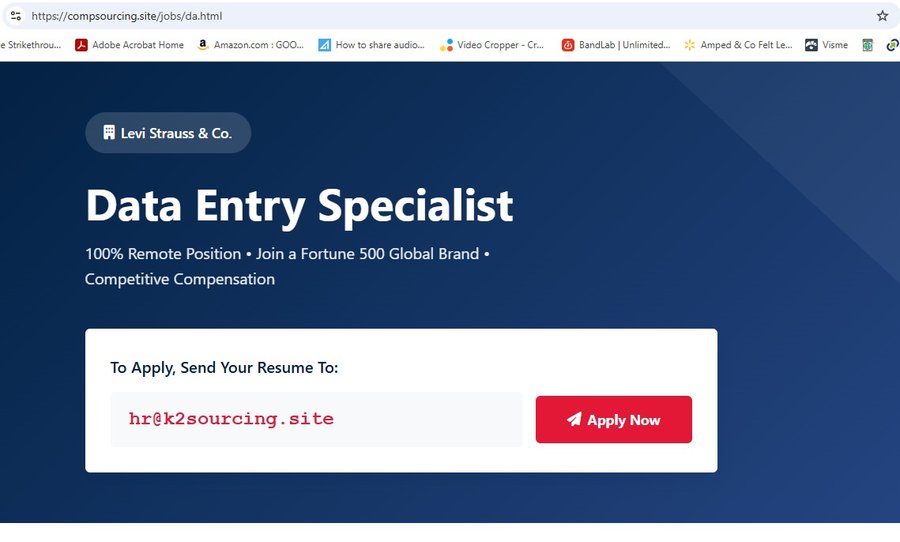
Every fake listing funneled applicants off LinkedIn to one of two dedicated phishing sites hosted on the domain compsourcing.site — one page built specifically to collect resumes for the fake "Customer Service Representative" role, the other for "Data Entry Specialist." The Data Entry page instructed applicants to send their resume directly to hr@k2sourcing.site, an address with no connection to Levi Strauss & Co. whatsoever. Every real Levi's job posting, by contrast, routes through Workday, the company's enterprise hiring platform of choice — these fake listings never touched it.
Why It Works
The greater deception is that Levi Strauss & Co. would likely never know. These fake postings don't flow into the requisition system the company's talent team actually has access to, which is precisely why scammers build a separate fake site to funnel unsuspecting applicants — the company has no visibility into a listing that never touched its own hiring infrastructure. Scammers don't expect anyone to review a verified page line by line; they post the jobs, field the applicants, and disappear once the resumes stop coming.
Status
This case is closed. The complete list of fake, verified listings was documented and provided to LinkedIn Trust & Safety, and Ngozi Eze was alerted directly to escalate with Levi Strauss & Co. A verification badge confirms a company is real. It does not confirm that every listing under that company's name is. Do not trust verification — verify everything for yourself.